



 English
A Complete Guide to Flat washer Placement, Function, and Best Practices
In mechanical assembly, construction, equipment manufacturing, and even DIY projects, one very common but often overlooked question is:
Where does the flat washer go on a screw?
Although a flat washer is one of the simplest and most widely used fasteners, its installation position has a direct impact on load distribution, joint reliability, surface protection, and service life. This article explains what is a flat washer, where it should be installed, and how to select and use different washer sizes correctly in real-world applications.
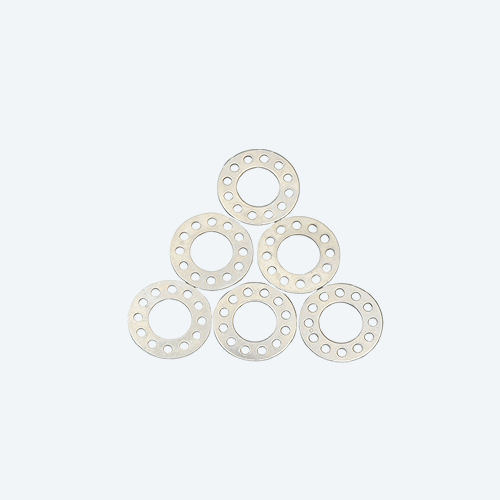
1. What Is a Flat Washer?
Before answering where does the flat washer go on a screw, it is important to understand:
What is a flat washer?
A flat washer is a thin, round disc with a central hole. Unlike Spring washers, it does not provide elastic force. Its primary functions include:
Distributing clamping force over a larger surface area
Preventing damage to the mating surface
Providing a smooth bearing surface for fasteners
Compensating for minor surface irregularities
Because of these functions, flat washers are widely used in metal, plastic, wood, and composite material assemblies.
2. The Core Rule: Where Does the Flat Washer Go?
General principle: place the flat washer on the rotating side
In most fastening applications:
If the screw rotates and the nut or threaded hole is fixed → place the flat washer under the screw head
If the nut rotates and the screw or bolt head is fixed → place the flat washer under the nut
This rule answers the question where does the flat washer go on a screw from an engineering perspective.
3. Most Common Case: Flat Washer Under the Screw Head
In many assemblies, especially those without a nut, the flat washer is installed between the screw head and the clamped material. Typical examples include:
Self-tapping screws
Wood screws
Screws threaded directly into a tapped hole
Assemblies where the nut is not accessible or does not rotate
For example, using an m4 flat washer or m5 flat washer under the screw head helps:
Prevent the screw head from sinking into the material
Protect painted or coated surfaces
Reduce localized stress
This is especially important for softer materials such as plastic or aluminum.
4. Bolt and Nut Assemblies: Flat Washer Under the Nut
In standard bolt-and-nut connections, tightening is usually done by rotating the nut while holding the bolt head stationary. In this case, the flat washer should be placed under the nut.
Common examples include:
m10 washer
m16 flat washer
3 8 flat washer
1 3 4 flat washer
Placing the flat washer under the nut reduces friction, protects the surface, and allows for more consistent tightening torque.
5. Spring Washers and Flat Washers Used Together
In applications requiring vibration resistance, spring washers and flat washers are often used together.
The correct installation order is usually:
Screw or nut → spring washer → flat washer → clamped surface
Reasons for this configuration include:
The spring washer provides anti-loosening force
The flat washer distributes load and protects the surface
Reversing this order reduces the effectiveness of the spring washer and can lead to joint loosening.
6. Common Flat Washer Sizes and Typical Applications
Small Flat Washers
m4 flat washer – electronics, light-duty assemblies
m5 flat washer – enclosures, small machinery
Medium Flat Washers
m10 washer – general mechanical equipment
3 8 flat washer – inch-based systems and North American standards
Large Flat Washers
m16 flat washer – heavy machinery and steel structures
4 inch outside diameter flat washer – structural and load-spreading applications
6 inch washer – large-scale construction and special engineering projects
Large-diameter washers are especially important when clamping soft materials or handling high loads.
7. Special Washer Dimensions and Use Cases
Large Inner Diameter Washers
1.25 id washer
These are commonly used for:
Large Bolts
Sleeve or spacer assemblies
Non-standard fastening applications
Large Inch-Size Washers
1 3 4 flat washer
Frequently used in:
Heavy equipment
Infrastructure projects
North American industrial systems
8. Common Installation Mistakes to Avoid
Placing the flat washer on the non-rotating side
Installing a spring washer underneath a flat washer
Using undersized washers in high-load applications
Using a flat washer as a substitute for a locking washer
These mistakes can significantly reduce joint strength and reliability.
9. Best Practices for Flat Washer Installation
Always place the flat washer on the rotating side of the fastener
Use flat washers when clamping soft or finished surfaces
Select large outer diameter washers for high-load applications
Combine flat washers with spring washers when vibration resistance is required
Match washer size to the fastener (m4, m5, m10, m16, 3/8, 1 3/4, etc.)
10. Final Answer: Where Does the Flat Washer Go on a Screw?
So, where does the flat washer go on a screw?
The answer is:
On the side of the fastener that rotates during tightening, directly against the surface being protected.
Whether you are using:
m4 flat washer or m5 flat washer
m10 washer or m16 flat washer
3 8 flat washer or 1 3 4 flat washer
1.25 id washer, 4 inch outside diameter flat washer, or 6 inch washer
Correct flat washer placement ensures better load distribution, surface protection, and long-term fastening reliability.
If you want next, I can also help you:
Rewrite this into a pure SEO-focused English version
Convert it into product category descriptions
Create FAQ sections for engineers and buyers
Adapt it for Amazon / Alibaba / B2B fastener listings