



 English
In mechanical assemblies, even the smallest components can have a major impact on reliability and performance. One such component is the Spring Washer, a simple but highly effective fastening element used to maintain tension, prevent loosening, and absorb vibration in bolted joints.
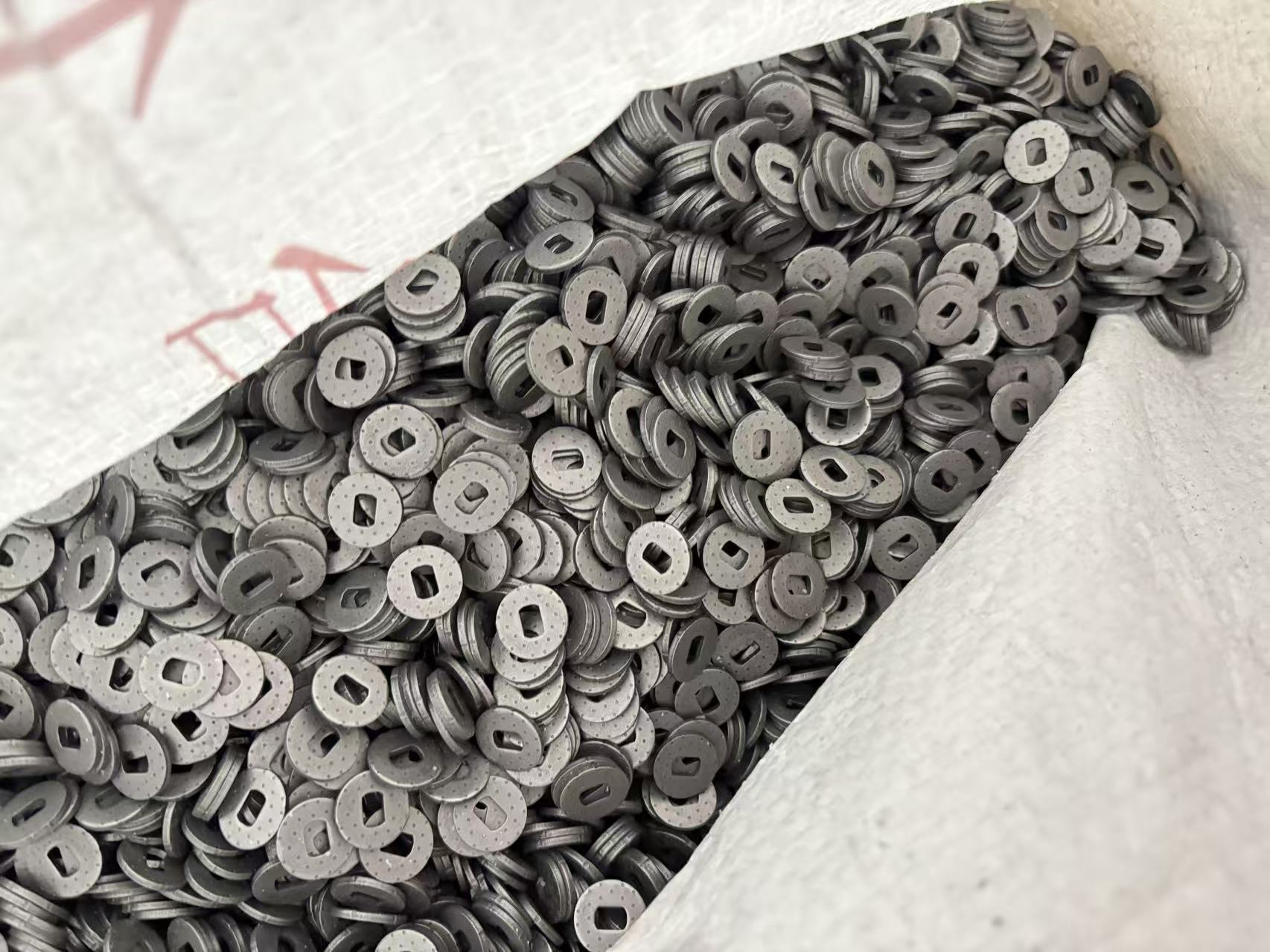
From industrial machinery to precision hinge systems such as laptop hinges or folding furniture shafts, the proper spring washer use ensures stable movement, consistent torque, and long product life. This article explains what a spring washer is, how it works, its common types such as belleville spring, wave spring washer, conical washer, and wavy washer, and how spring washers are applied in rotating shaft structures.
What Is a Spring Washer?
A spring washer is a specially designed washer that provides a spring force when compressed. Unlike standard washers, which only distribute load, a spring washer stores mechanical energy and maintains tension within a fastener assembly.
Because of this elastic force, spring washers help prevent bolts or rotating shafts from loosening due to vibration, repeated movement, or mechanical stress.
Common characteristics include:
Elastic deformation under load
Ability to maintain clamping force
Shock absorption and vibration resistance
Long-term reliability in dynamic systems
Different types of spring washers are used depending on the required torque, structural design, and application environment.
How Does a Spring Washer Work?
The working principle of a spring washer is based on elastic compression.
When a bolt or shaft assembly is tightened, the washer compresses slightly and produces a restoring force. This force continuously pushes against the fastener and the connected surface, ensuring that the joint remains tight even when subjected to vibration or repeated motion.
The functions of a spring washer include:
Maintaining Preload
The spring force maintains pressure on the bolt or shaft, preventing loosening.Absorbing Shock and Vibration
In rotating structures such as hinges, washers absorb dynamic loads.Providing Friction and Damping
Washers generate controlled friction, producing a smooth damping feel during rotation.Supporting Torque Control
In rotating shafts, the correct washer combination determines torque resistance.
Because of these functions, spring washers are widely used in mechanical hinge systems, electronics, automotive components, and precision equipment.
Types of Spring Washers
Belleville Spring
A belleville spring, also called a conical spring washer, has a cone-shaped design.
Key features:
High load capacity
Compact structure
Excellent spring performance
Applications include heavy-duty bolts, automotive suspensions, and industrial machinery where high axial loads are required.
Wave Spring Washer
The wave spring washer is designed with multiple wave-like curves.
Advantages include:
Compact height
Uniform spring force
Effective vibration absorption
It is commonly used in precision equipment, electronics, and rotating hinge structures.
Wavy Washer
A wavy washer is similar to a wave spring washer but usually thinner and more flexible.
It is widely used in:
Electronics assemblies
Light mechanical systems
Precision rotating mechanisms
The wavy shape allows the washer to provide consistent preload in compact spaces.
Conical Washer
A conical washer distributes load evenly while providing spring action.
Benefits include:
Improved load distribution
Increased joint stability
Reduced stress concentration
It is often used in heavy-duty fastening and rotating structures.
Spring Lock Washer
A spring lock washer is one of the most common types used to prevent bolts from loosening.
The split design allows the washer edges to bite slightly into the mating surfaces, creating additional friction.
Common applications include:
Machinery assemblies
Automotive fasteners
Construction equipment
Spring Washers and Flat Washers
In many applications, spring washers and flat washers are used together to achieve optimal performance.
| Washer Type | Main Function |
|---|---|
| Flat washer | Distributes load and protects surfaces |
| Spring washer | Maintains tension and prevents loosening |
Using both washers improves stability, reduces wear, and ensures a reliable fastening system.
Key Shaft Design Requirements
In rotating hinge systems, selecting the correct washer is closely related to the design of the shaft and its mechanical requirements.
1. Rotation Angle and Range
The first step is defining the rotation range of the shaft.
Important factors include:
Single-direction or bidirectional rotation
Maximum rotation angle
Whether the shaft requires self-locking function
For example, laptop hinges or folding furniture often require specific angle limits and smooth resistance.
2. Torque Capacity
The shaft must withstand torque generated during rotation or folding.
The washer size selection follows a simple rule:
High torque → larger washer
Low torque → smaller washer
Proper torque control ensures stable movement without looseness.
3. Service Life
Understanding the product’s usage scenario is essential.
For example:
Foldable furniture
Laptop hinges
Adjustable displays
These applications require consistent damping force over thousands of cycles.
The design of the shaft and washers directly affects the durability and lifespan of the product.
4. Appearance Design
Different products require different hinge appearances.
The shaft structure should be:
Compact
Visually clean
Mechanically stable
Well-designed washer structures help achieve both functional and aesthetic goals.
Functions of Different Shaft Washers
In rotating shaft structures, multiple washer types are used together.
Flat Washer
A flat washer has a simple structure and provides friction-based damping.
Functions include:
Even pressure distribution
Reduced wear between components
Extended shaft lifespan
Spring Washer
The spring washer generates torque within the shaft structure.
It provides resistance during rotation and ensures consistent motion.
Friction Hook Washer
This washer protects the shaft body and helps maintain structural integrity.
Double-Sided Friction Hook Washer
This washer functions similarly to a friction hook washer but protects both sides of the shaft simultaneously, reducing the need for multiple components.
Limit Hook Washer
A limit washer restricts rotation angle.
For example:
Limiting movement from 90° to 180°
This prevents mechanical over-rotation.
Cam Washer
The cam washer works with a groove washer to create self-closing or self-locking effects during rotation.
Groove Washer
The groove washer works together with the cam washer to generate controlled locking during movement.
T-Type Shaft Washer
The T-shaped shaft washer forms part of the main shaft structure and supports mechanical stability.
Materials Used in Spring Washers
Different materials influence strength, corrosion resistance, and durability.
Carbon Steel
Common grades include:
65Mn
45 steel
SK7
SK5
Advantages:
High hardness
Stable mass production
Suitable for high-strength hinge structures
Disadvantages:
Poor corrosion resistance
Easy to rust outdoors
Magnetic interference possible
Stainless Steel
Advantages:
Excellent corrosion resistance
Non-magnetic properties
Ideal for visible parts
Disadvantages:
Lower strength compared with carbon steel
Lower stamping efficiency
Copper
Copper washers are rarely used but can be applied between soft moving parts.
Advantages:
Good corrosion resistance
Disadvantages:
Lower hardness
Shorter lifespan
Surface Treatment Processes
Spring washers typically undergo several processing steps:
Heat treatment (HRC 43–50 hardness)
Burr removal
Surface coating
Common coatings include:
Eco-friendly nickel plating
Chemical nickel plating
Black oxide
Nickel alloy plating
For high corrosion resistance requirements, coatings such as zinc-nickel alloy or blue-white zinc are recommended.
Washer Size Selection
Correct size selection is essential for reliable performance.
Important dimensions include:
Inner diameter
Outer diameter
Thickness
Guidelines:
The washer inner diameter must match the shaft diameter
Larger torque requires thicker washers
Smaller torque allows thinner washers
Accurate measurement before selection ensures proper installation and stable operation.
Testing and Quality Control
Lifetime Testing
Manufacturers simulate real-world conditions to evaluate durability.
Tests measure:
Number of rotation cycles before cracking
Torque variation after repeated use
High-quality shaft washers maintain torque decay within 20% after lifetime testing.
Screening Process
Quality control involves two stages:
Equipment Screening
CCD inspection equipment detects:
Dimensional tolerances
Scratches
Cracks
Holes
Manual Inspection
Operators visually inspect components and remove defective products before packaging.
Finally, washers are weighed, packaged, and prepared for shipment.
Conclusion
A spring washer is a small but critical component that ensures secure fastening, vibration resistance, and reliable torque control. Whether used as a belleville spring, wave spring washer, wavy washer, conical washer, or spring lock washer, these components play a vital role in both traditional fastening systems and modern rotating shaft designs.
When combined with flat washers and integrated into well-designed hinge structures, spring washers help achieve smooth rotation, stable torque, and long service life. Understanding the principles of spring washer use, selecting the correct material, and performing proper testing ensures optimal performance in industries ranging from electronics to mechanical engineering.
In short, the right spring washer design can significantly improve the durability, stability, and functionality of any mechanical assembly.