



 English
In mechanical assemblies, washers are essential components that ensure bolts and nuts maintain the correct tension, prevent loosening, and protect surfaces. Among the most common washers are Spring washers—including belleville spring washers, conical spring washers, and disc spring washers—and Flat washers. Understanding how to use a spring washer and determining does spring washer or flat washer go first is crucial for engineers in the shaft industry and hinge industry. Proper installation can significantly improve rotational feel, connection strength, and component lifespan.
1. Introduction to Washers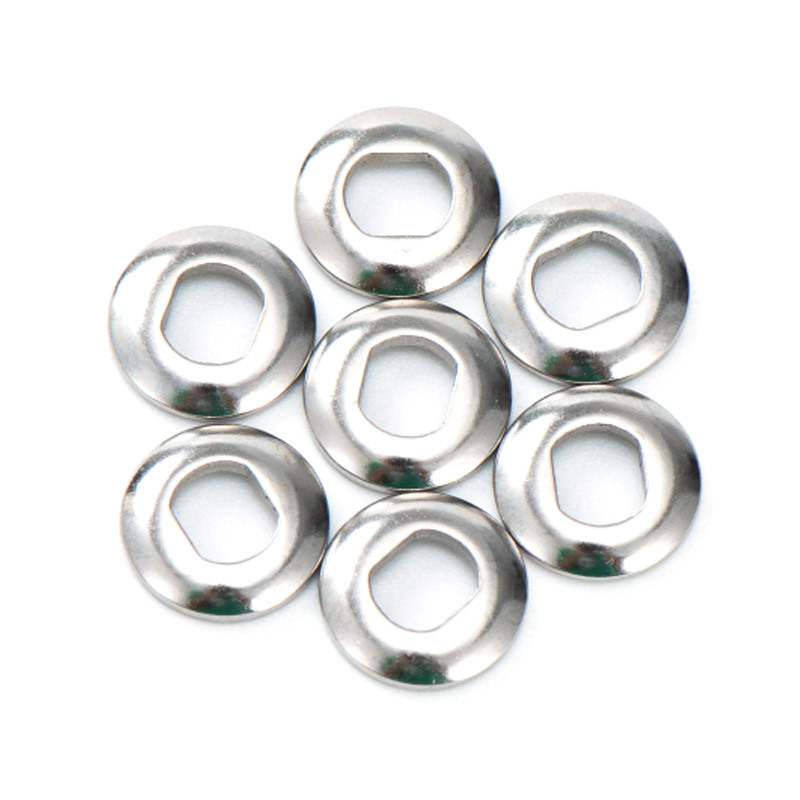
1.1 Flat Washers
A flat washer is a thin, flat ring used to distribute the load of a threaded fastener. Its primary functions include:
Protecting surfaces from damage
Providing a smooth bearing surface for nuts or bolts
Distributing compressive load over a larger area
Flat washers are commonly used in heavy-duty bolted assemblies and precision applications, such as motor shafts, hinge plates, and structural connections.
1.2 Spring Washers
Spring washers are designed to provide continuous tension and prevent loosening due to vibration or thermal expansion. Common types include:
Belleville spring washers / belleville disc spring washers: conical washers providing high axial load capacity.
Conical spring washers: Provide elastic tension under dynamic loads.
Disc spring washers: Offer compact design with high load resilience.
In shaft and hinge assemblies, spring washers help maintain torque, absorb axial loads, and extend component life.
2. Functions of Spring Washers in Shafts and Hinges
The primary function of a spring washer is to generate torque within the shaft, absorbing axial load and maintaining tension. This ensures:
Smooth rotation (“quality feel in rotation”)
Strong, reliable connections
Extended service life
In hinges, spring washers stabilize opening and closing resistance, prevent loosening, and maintain consistent torque over repeated cycles.
Key benefits include:
Maintaining bolt preload
Reducing vibration-induced loosening
Improving alignment and rotational stability
Protecting shaft and hinge surfaces from wear
3. Combining Flat Washers and Spring Washers
In many applications, both flat washers and spring washers are used together. The question arises: does spring washer or flat washer go first?
3.1 Standard Installation Order
Bolt → Flat Washer → Spring Washer → Nut → Workpiece (or Shaft / Hinge Plate)
The recommended approach is:
Flat washer first, then spring washer.
Reasons:
Surface Protection: The flat washer distributes the load and prevents the spring washer from digging into the material surface.
Load Distribution: The flat washer spreads compressive stress over a larger area, reducing material deformation.
Spring Functionality: Placing the spring washer on top ensures it can compress and provide the necessary elastic tension to maintain bolt preload.
4. Variations in Washer Combinations
4.1 Using Belleville Spring Washers
Belleville spring washers are often stacked in series or parallel to achieve higher load capacity. Installation order:
Bolt → Custom flat washers → Belleville disc spring / Belleville spring washers → Nut
Series or parallel arrangements allow engineers to fine-tune the axial load and maintain stable torque under varying conditions.
4.2 Using Conical or Disc Spring Washers
conical spring washers or disc spring washers are designed for high-load shaft assemblies or heavy-duty hinges:
Installation: flat washer under conical spring washer
Ensures the spring washer maintains compression and distributes the force evenly across the component surface.
4.3 Custom Washers
In precision assemblies, custom flat washers and custom belleville washers may be designed to match specific bolt diameters, preload requirements, or surface finish considerations.
5. Practical Examples in Shaft and Hinge Industries
5.1 Shaft Applications
In rotating shafts:
Flat washer protects the shaft housing or bearing seat.
Spring washer maintains axial load, stabilizes torque, and prevents slippage.
For high-speed or high-precision shafts:
Cone washers or belleville disc springs are preferred for consistent preload and reduced wear.
5.2 Hinge Applications
In door, furniture, or industrial hinges:
Flat washer prevents the hinge plate from deforming under the nut.
Spring washer provides smooth opening resistance and prevents loosening over repeated cycles.
For adjustable hinges:
Custom belleville washers can fine-tune friction torque.
Disc spring washers allow precise control of hinge tension.
5.3 Professional Combination Solutions
We provide dozens of professional combination solutions for flat washers and spring washers. Depending on your shaft size, rotational speed, load, and hinge type, we can design the optimal arrangement of:
Flat washers
Belleville spring washers
Conical spring washers
Disc spring washers
Cone washers
Custom flat washers and custom belleville washers
These solutions are engineered to maximize smooth rotation, strong connection, and long service life for any shaft or hinge application. Engineers can select the best combination to meet precise mechanical and industrial requirements.
6. Tips for Installation
Always place the flat washer first to protect the surface.
Place the spring washer on top to ensure it functions correctly.
Check the bolt torque according to manufacturer specifications.
Inspect periodically in high-vibration environments to maintain preload.
Use surface-treated washers (zinc, nickel, blackening) for corrosion resistance.
Choose custom washers when standard sizes do not meet load or spacing requirements.
7. Summary: Best Practices
Flat washer goes first, then spring washer.
Spring washer types: belleville spring washers, conical spring washers, disc spring washers.
Professional combinations: dozens of pre-designed solutions are available for various shaft and hinge applications.
Protect surfaces and distribute load using flat washers.
Maintain torque and preload using spring washers.
Custom washers can be used for precision shafts or hinges.
Proper installation ensures:
Smooth rotation
Strong and reliable connections
Extended operational life
By following these guidelines, engineers can optimize mechanical performance in both shaft and hinge assemblies.
8. Conclusion
Understanding does spring washer or flat washer go first is essential for reliable assembly. Combining flat washers with spring washers—including belleville spring washers, disc spring washers, conical spring washers, and cone washers—ensures optimal torque, surface protection, and long-term durability.
Moreover, our dozens of professional combination solutions allow clients to select the most suitable washer pairings for any shaft or hinge application, guaranteeing:
“Smooth rotation, strong connection, and long service life.”