



 English
The plain washer manufacturing process turns flat sheet material into a finished load-distributing Washer through material selection, precision stamping, deburring, surface treatment, dimensional inspection, and final sampling. Because a plain (flat) Washer's main job is to spread load evenly and protect the mating surface, flatness and edge condition matter just as much as diameter accuracy. Here is how each stage works.
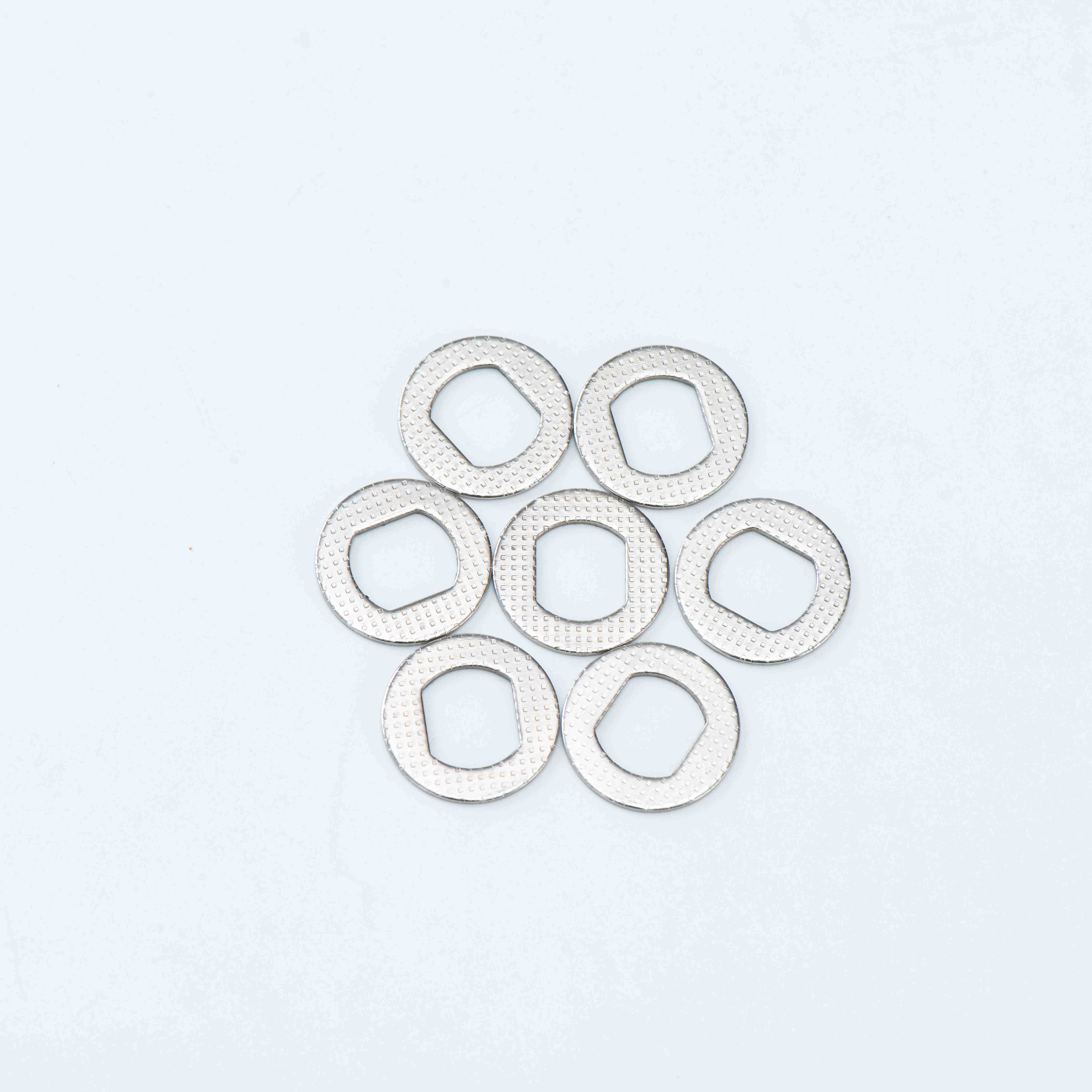
Step 1: Material Selection for Plain Washers
Plain washers are produced in a range of materials depending on the application: carbon steel for general strength and cost efficiency, stainless steel for corrosion resistance, brass or copper where electrical conductivity matters, and nylon for lightweight, non-conductive uses. Material is selected before stamping based on the customer's application environment. See the full range on our Flat Washer product page.
Step 2: Precision Blanking and Stamping
Washers are stamped from coil using progressive dies that control outer diameter, inner diameter, and hole centering in a single continuous run. Standard tolerance is held to 0.03–0.05 mm, with tighter tolerances of 0.01–0.02 mm available for precision instrument or electronics applications.
Step 3: Deburring and Edge Finishing
Stamping leaves a small burr along the cut edge. This is removed through a deburring process before the washer moves forward, since a sharp or uneven edge can scratch mating surfaces and shorten assembly life — especially in consumer electronics and precision instrument assemblies where the washer sits against a finished surface.
Send us your assembly's surface sensitivity and load requirement, and we'll confirm the right edge finish for your application.
Step 4: Flatness Control
Flatness is typically controlled within 0.02 mm. An uneven Flat Washer concentrates load on one side rather than spreading it evenly, which accelerates surface wear and can cause a fastener to loosen faster under vibration. This is why flatness is checked as its own quality point rather than assumed from diameter accuracy alone.
Step 5: Surface Treatment
Depending on the operating environment, plain washers can be finished with eco-friendly nickel, electroless (chemical) nickel, black oxide, or zinc-nickel alloy coating. Each option balances corrosion resistance, appearance, and cost differently, and is selected based on where the finished product will be used.
Step 6: Dimensional and Visual Inspection
Outer diameter, inner diameter, thickness, and flatness are checked using calipers and optical comparators. Parts are also visually inspected for scratches, residual burrs, and plating defects before moving to final packaging.
Step 7: Final Sampling Before Shipment
A final sampling check is performed on every batch before shipment, regardless of order size. Because there is no strict minimum order quantity, small trial orders go through the same quality gate as bulk production runs, and orders can typically ship the next day when stock is available.
Choosing a Reliable Plain Washer Manufacturer
When evaluating a plain washer manufacturer, look beyond price to tolerance capability, material options, and available surface treatments. Mengpeng Hardware keeps nearly 2,000 standard components and 90 million pieces in stock, supporting both single-piece samples and bulk OEM orders. Browse the full Flat Washer range or send your drawing for a quote.
Frequently Asked Questions
What materials are plain washers typically made from?
Common materials include carbon steel, stainless steel, brass, copper, and nylon, selected based on strength, corrosion resistance, or electrical conductivity requirements.
How tight is the flatness tolerance for a precision plain washer?
Flatness is typically held within 0.02 mm, which helps ensure the load is distributed evenly across the mating surface.
Can plain washers be customized in material and surface treatment?
Yes. Material, thickness, dimensions, and surface treatment can all be customized to match a specific application.